Anchoring Read online In Alex Edmans' great book The Madness of Markets, he writes about how the bookshop Computer Literacy, Inc changed its name. The store, in 1999, became Fatbrain.com. But why? What's wrong with Computer Literacy, Inc? According to Alex Edmans, it was to profit from the dot-com bubble. And it worked. Fatbrain's stock climbed 36% after the name change. A Bloomberg article about the name change. But was the Fatbrain spike in earnings a one-off? To find out, Cooper, Dimitrov...
9 days ago • 1 min read
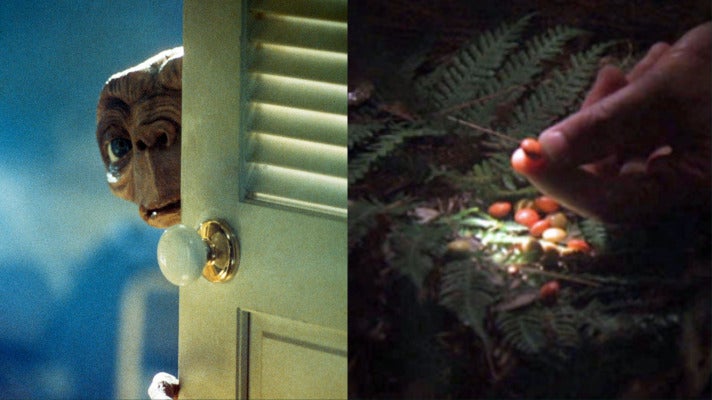
Mere Exposure Read online In E.T., director Steven Spielberg planned a scene where the alien creature was coaxed out of hiding using sweets. Keen not to miss a profitable opportunity, Spielberg approached Mars to use M&M’s for a small fee. Mars turned Spielberg down. Undeterred, Spielberg asked Hershey’s for product placement. Hershey’s had just launched Reese’s Pieces, so they jumped at the chance to feature the new chocolates on screen. Reese’s Pieces were used to lure out the alien. After...
16 days ago • 2 min read
Concrete Phrases Read online Take a look at this satellite photo. What do you see? Most see a busy Walmart car park. But stock market investors see earnings. RS Metrics sells daily satellite images of parking lots at 44 of the USA’s largest retailers. They photograph 67,000 locations every day (assuming no cloud cover). To a layperson like me, this seems ridiculous. Surely there’s a better metric investors can use to gauge business success? But investors place a high value on these images....
23 days ago • 1 min read
Deep vs Shallow Connections Read online A few weeks back, the world's best-known YouTuber (MrBeast) wrote a book with one of the world's most successful authors (James Patterson). The book is called "The Most Dangerous Games". It creates a fictionalised version of MrBeast's YouTube videos except with more death, romance, and other topics that publishers hope will keep people reading. I'd have wagered a pretty large bet that this book would succeed. James Patterson has sold 425 million books....
30 days ago • 2 min read
Isolation Effect Read online This viral paper on AI revealed something I've presumed but never had evidence for. AI makes us all sound the same. The authors collected 318,490 stories on Reddit's r/WritingPrompts from January 2018 to November 2024¹. They only analysed posts over 200 words. They measured how unique the posts were over time, and the results are fairly shocking. 2018, 2019, 2020, 2021: All posts contain a unique writing style. 2022, 2023: Writing styles started to converge. 2024:...
about 1 month ago • 2 min read
Idolising the Individual Read online I've never been to Japan, but I've read that this ⬇️ is commonplace in nearly every Japanese food store. Thanks to Kevin May for sharing It's called kao-no-mieru-kankei, which translates to face-to-face relationship. Walk into most Japanese supermarkets, and the produce section has a local-grower corner with photos of the farmers who harvested the food. I love it. It's great to see the individual who picked your food. And strangely, it probably makes that...
about 1 month ago • 1 min read
Money-Back Guarantees Read online I love this ad. "If the soles wear out before 3,000 miles, we'll replace the shoes free." Customers have become so used to false promises and unrealistic claims that a money-back guarantee like this really stands out. But does it work? The Evidence In 2011, a paper published in the Journal of Retailing studied money-back guarantees¹. 200 consumers saw ads for eight different products. Sometimes the product had a money-back guarantee, plus a guarantee logo....
about 2 months ago • 1 min read
Social Proof Read online Incredible marketing can be incredibly simple. In 2007, two Chinese researchers ran an experiment at 13 Beijing restaurants¹. Some diners were sat on tables with a plaque listing the most popular dishes. Others were sat at tables with no plaque. Did the plaque change what people choose? Diners who saw the most popular dish plaques were 18% more likely to order one of those dishes, even at a higher price. That's not all. Customers who ate a "most popular dish" rated it...
about 2 months ago • 1 min read
Labour Looks Smarter Read online Last week I shared one of my unhinged theories with you Many of you rightly pointed out that one study from 2011 is hardly enough to draw lofty conclusions. Fair enough, I've gathered some more evidence. Starting with an imaginary story from my barbers. A good barber is a slow barber Imagine you go to your local barbershop. Your normal barber is on holiday, so you're assigned to someone new. Typically your barber spends 45 minutes cutting your hair. He's not...
2 months ago • 2 min read