Why this ad sticks in my mind | Nudge Newsletter


Generation Effect

Read online


This ad outside my local opticians sticks in my mind.

At first glance, it's bizzare.

It doesn't promote the business, showcase a promotion, or entice people in.

And yet, I think it's weirdly effective due to the generation effect.

In 1978, researchers¹ asked participants to either read work pairs or generate missing words from cues. For example:

Read condition: hot → cold

Generate condition: hot → c___

Those generating answers consistently remembered more across all memory tests.

In 2020, the study was repeated² with brand names.

Participants were shown ads with brand names containing missing letters, for example, "H_BC."

It was obvious to readers that the bank was HSBC, but by removing one letter, the ad became more engaging.

Shotton, Treharne, and Burnett found that brand names with missing letters were 14% more memorable.

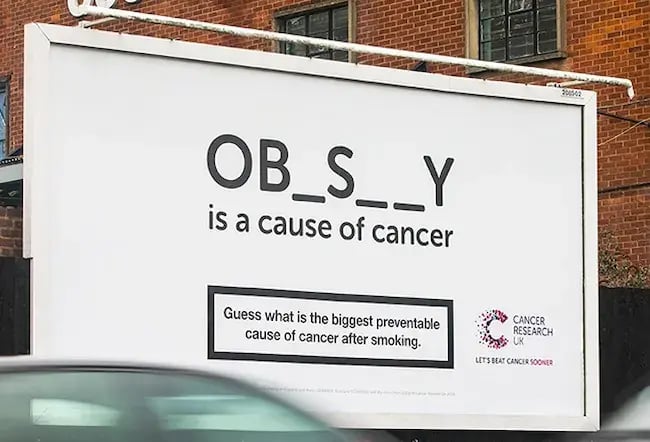
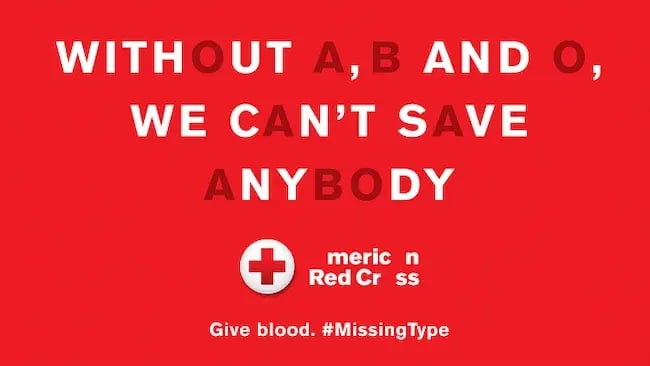
Many ads apply this finding in a literal way.

Like Cancer Research UK.

And American Red Cross.

But my local opticians do something unique.

On average, we blink once every 3 seconds.

So those who walk past this sign will almost certainly blink while reading it.

That blink, rather than being an unconscious action, is now reframed as a conscious engagement.

And rather than ignoring the ad, we're forced to think about it, kicking in the generation effect.

It's a lovely example, with a simple takeaway.

Don't spell it out. Let your audience do some heavy lifting.


The generation effect is one of 85 principles you'll find in the Nudge Vaults.

In fact, Nudge Vaults subscribers can use VaultsGPT to apply this principle to their work:

Get access right now →

Or you can preview your first 50 insights for free

Cheers,

Phill

¹Slamecka, N. J., & Graf, P. (1978). The generation effect: Delineation of a phenomenon. Journal of Experimental Psychology: Human Learning and Memory, 4(6), 592–604.

²Shotton, R. (2023). The illusion of choice: 16½ psychological biases that influence what we buy. Harriman House.

As a behavioural science practitioner, I believe in the peak-end rule.

Tune into Nudge | Advertise with Nudge | Unsubscribe

Nudge Newsletter

I spend 18 hours each week turning marketing psychology into readable newsletters.

Read more from Nudge Newsletter

Isolation Effect Read online Noah Kagan tested his book cover design by photoshopping the book onto shelves to see what stood out. The green cover isn't different, but it is distinct. In 1933, German researcher Hedwig Von Restorff¹ published a paper on memory and distinctiveness. She gave participants long lists of letter combinations to remember (e.g. JTSW, UCSM, PLST), but among them was a single number sequence: 9125. When participants returned after a distraction task, Hedwig found that...

Social Proof Read online "Window cleaning in progress" I love this board because it remembers something most marketers forget. A real photo taken on a suburban street in Houston. Cialdini proved that we're persuaded by others. In an Arizonan hotel room, he placed two messages on hotel doors designed to convince guests to reuse their towels. “Help us save the environment” = 35% towel reuse. “Most guests reuse their towels” = 44% towel reuse. We're persuaded by others' actions. So, if a...

Associative Learning Read online I'm reading The Expectation Effect. On page 52¹, there's a story that every marketer should read: The surgeon John Noland Mackenzie was among the first to test a negative expectation effect in medicine. Working at Baltimore's Eye, Ear and Throat Charity Hospital in the 1880s, he examined a 32-year-old woman with severe asthma and hay fever. When exposed to pollen, her nose and eyes would run and her throat would itch so badly she felt she must "tear [it] out...