Two behavioural science biases to try today | Nudge Newsletter


Mystery Gifts

​Read online​


Would you go for this?

It’s eufy’s UK page for a mystery gift.

You get one of these security cameras for free, picked at random, and the “£499” is just the most it could be worth.

Now, I have no idea if anyone is buying this.

But I love it because it leverages two wonderful behavioural science principles.

Free needs a value

Imagine you're offering a free product in your bundle.

For example, I bought a reMarkable tablet recently, which came with a free stylus.

reMarkable could say "free stylus included", or they can be concrete about the value of the free gift.

This is exactly what Priya Raghubir tested in 2004¹.

She showed participants a set of ads for perfumes. Sometimes a "free" item had a value attached to it; other times it didn't.

Then each participant was asked how much they'd pay.

Turns out, products are seen as 55% more valuable when the free item is given a specific value.

Keep things a mystery

The other principle used by that mystery box is the curiosity gap.

We're drawn, consistently, towards mystery².

When given a choice between a known product and a mystery one:

  • 89% chose the mystery stress ball over a visible top-seller
  • 68% chose a mystery hotel option
  • 81% chose a mystery song

This barbershop promotional leaflet does the same thing.

We're drawn towards mystery, and we love free things with a value.


The curiosity gap and the power of free are just two principles in the Nudge Vaults.​

Here's a look inside:

Get access to the Vaults right now →​

Or you can preview your first 50 insights for free →

Cheers,

​Phill​

P.S. Inspired by the curiosity gap, I'm introducing a new mystery link for every newsletter:

¹Raghubir, P. (2004). Free gift with purchase: Promoting or discounting the brand? Journal of Consumer Psychology, 14(1–2), 181–186.

²Buechel, E. C., & Li, R. (2023). Mysterious consumption: Preference for horizontal (vs. vertical) uncertainty and the role of surprise. Journal of Consumer Research, 49(6), 987–1013.

As a behavioural science practitioner, I believe in the peak-end rule.

​Tune into Nudge | Advertise with Nudge | Unsubscribe

Nudge Newsletter

I spend 18 hours each week turning marketing psychology into readable newsletters.

Read more from Nudge Newsletter
Criticised AI mural of Bristol on Bedminster pub wall removed - BBC News

AI Designs Read online A month back, the pub down the road from me erected this mural. It tries to depict the city of Bristol, but it gets a lot wrong. The mural shows a tower from Canada rather than Bristol. There's a bridge that doesn't belong in the city. And even the Banksy looks off. Clearly, it's AI-generated. And local residents hated it. Caroline Maggs told Bristol 24/7 that it "undermines artists' work". The BMC called it disrespectful. Others called it a "slap in the face" to local...

Beyond Provocative: How One AI Company's Ad Campaign Betrays Humanity -  Roger Wong

Anchoring Read online In Alex Edmans' great book The Madness of Markets, he writes about how the bookshop Computer Literacy, Inc changed its name. The store, in 1999, became Fatbrain.com. But why? What's wrong with Computer Literacy, Inc? According to Alex Edmans, it was to profit from the dot-com bubble. And it worked. Fatbrain's stock climbed 36% after the name change. A Bloomberg article about the name change. But was the Fatbrain spike in earnings a one-off? To find out, Cooper, Dimitrov...
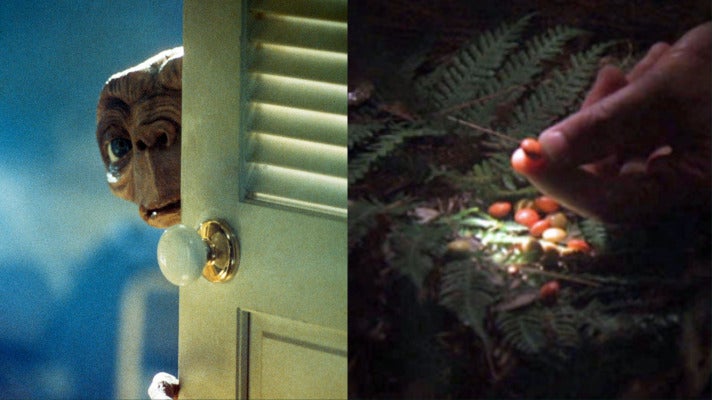
Mere Exposure Read online In E.T., director Steven Spielberg planned a scene where the alien creature was coaxed out of hiding using sweets. Keen not to miss a profitable opportunity, Spielberg approached Mars to use M&M’s for a small fee. Mars turned Spielberg down. Undeterred, Spielberg asked Hershey’s for product placement. Hershey’s had just launched Reese’s Pieces, so they jumped at the chance to feature the new chocolates on screen. Reese’s Pieces were used to lure out the alien. After...