Shops in Japan have one big difference | Nudge Newsletter


Idolising the Individual

Read online


I've never been to Japan, but I've read that this ⬇️ is commonplace in nearly every Japanese food store.

It's called kao-no-mieru-kankei, which translates to face-to-face relationship.

Walk into most Japanese supermarkets, and the produce section has a local-grower corner with photos of the farmers who harvested the food.

I love it.

It's great to see the individual who picked your food. And strangely, it probably makes that food seem higher quality.

The Evidence

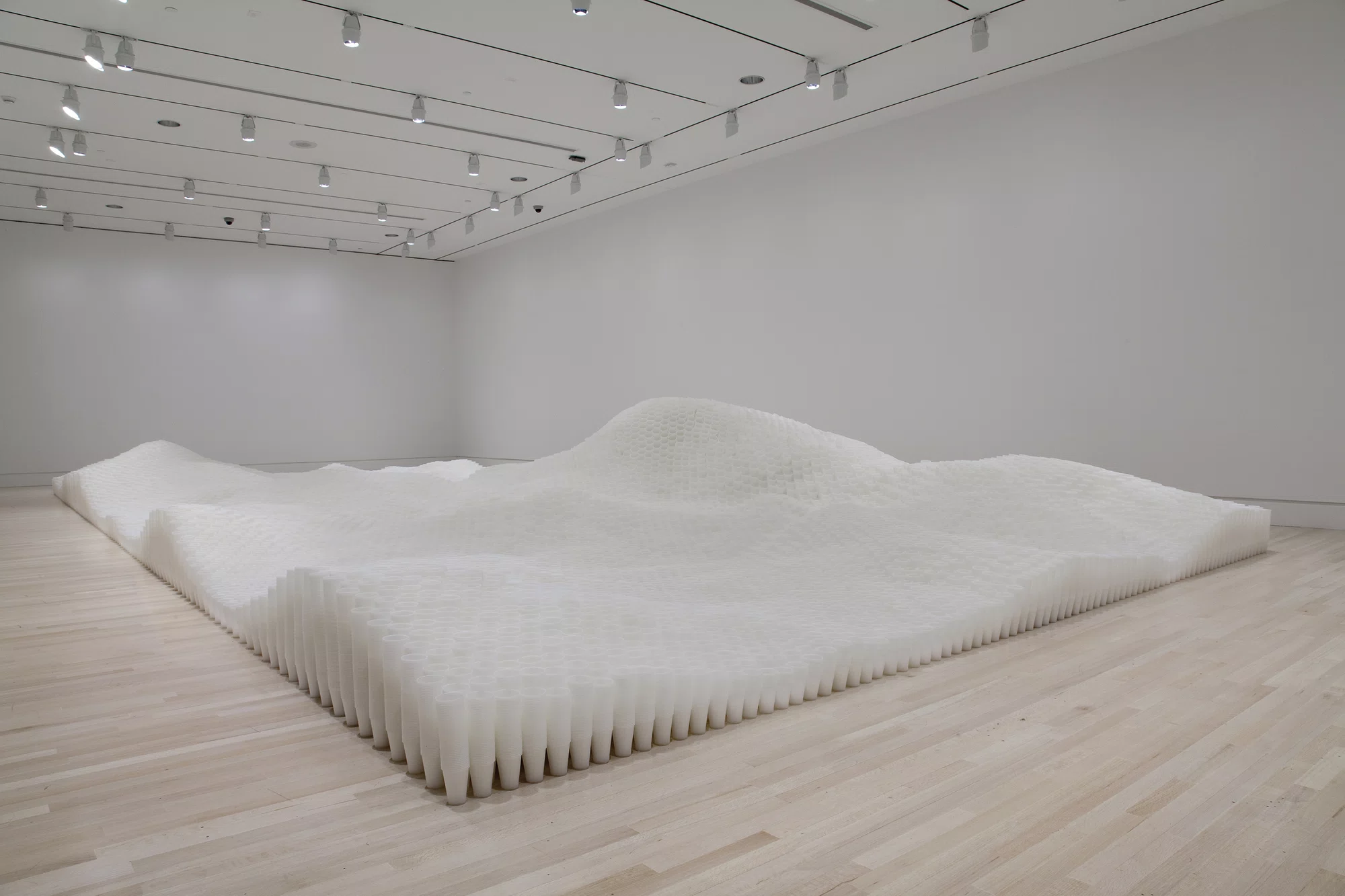
In 2014¹, researchers Smith and Newman showed 222 people a giant sculpture made of 500,000 stacked plastic cups.

The sculpture titled Untitled (Plastic Cups) is breathtaking. Up close it looks like trash, but from a few feet back it resembles a bird’s-eye view of an arctic valley.

Everyone was told the sculpture took 30 hours to build, but different groups were told one, two, three or five artists made it.

Each participant is asked to rate the quality of the sculpture out of seven.

Those ratings dropped in tandem with the number of artists.

With one artist, the piece was rated at 5.87, with two, it’s 5.51, three is 5.39 and at five artists, ratings drop by 11.3% to 5.24.

All participants looked at the same art, but believing it was made by a solo creator made the art appear better in their minds.

Which explains why kao-no-mieru-kankei works so well.

We value things more when we know they're created by a single individual, so tomatoes picked by a farmer called Satō will taste better than one sold by an organisation called Tesco.


There are almost 600 more insights like this in the Nudge Vaults which I should mention was built entirely by me.

Get access to the Vaults right now →

Or you can preview your first 50 insights for free


Cheers,

Phill

¹Smith, R. K., & Newman, G. E. (2014). When multiple creators are worse than one: The bias toward single authors in the evaluation of art. Psychology of Aesthetics, Creativity, and the Arts, 8(3)

As a behavioural science practitioner, I believe in the peak-end rule.

Tune into Nudge | Advertise with Nudge | Unsubscribe

Nudge Newsletter

I spend 18 hours each week turning marketing psychology into readable newsletters.

Read more from Nudge Newsletter

Money-Back Guarantees Read online I love this ad. "If the soles wear out before 3,000 miles, we'll replace the shoes free." Customers have become so used to false promises and unrealistic claims that a money-back guarantee like this really stands out. But does it work? The Evidence In 2011, a paper published in the Journal of Retailing studied money-back guarantees¹. 200 consumers saw ads for eight different products. Sometimes the product had a money-back guarantee, plus a guarantee logo....

Social Proof Read online Incredible marketing can be incredibly simple. In 2007, two Chinese researchers ran an experiment at 13 Beijing restaurants¹. Some diners were sat on tables with a plaque listing the most popular dishes. Others were sat at tables with no plaque. Did the plaque change what people choose? Diners who saw the most popular dish plaques were 18% more likely to order one of those dishes, even at a higher price. That's not all. Customers who ate a "most popular dish" rated it...

Labour Looks Smarter Read online Last week I shared one of my unhinged theories with you Many of you rightly pointed out that one study from 2011 is hardly enough to draw lofty conclusions. Fair enough, I've gathered some more evidence. Starting with an imaginary story from my barbers. A good barber is a slow barber Imagine you go to your local barbershop. Your normal barber is on holiday, so you're assigned to someone new. Typically your barber spends 45 minutes cutting your hair. He's not...