Prove your dedication | Nudge Newsletter


Prove Your Dedication

Read online


Imagine your hometown football club booked Swedish legend Ibrahimovic to host a 2-hour training session with local children.

That’s what 113 participants at the Stockholm School of Economics were asked to imagine in 2017¹.

But there was a catch.

Half were told the club spent almost no time persuading Ibrahimovic, with the manager saying:

"It's fantastic that it was so easy to persuade you to come."

The others were told booking Ibrahimovic took extreme dedication and patience, with the manager contacting dozens of people, flying to Sweden and negotiating over the course of a year.

In this scenario, Ibrahimovic only agreed after the manager offered to act as his personal tour for a full weekend.

Those told Ibrahimovic needed almost no persuading rated the event at 7.49/10.

But those told about the dedication and patience needed to create the event rated it at 8.32/10, 10% higher.

Dedication changes perception.

A brand that shows the dedication they've put into their product will be preferred.

There are plenty of examples of brands using this bias.

Every Birkin bag is made by a single craftsman, usually in one of Hermès' French factories, and requires between 15 and 20 hours' work. Each bag sells for £10,000.

Pixar ran PR stories revealing that a single frame for the movie Monsters University took hours 29 hours to render.

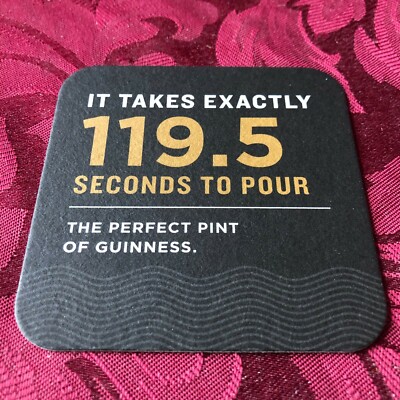
And Guinness state that their beer takes 119.5 seconds to pour.

Dedication alters perception.

It makes a leather bag as expensive as a car, a stout more flavoursome and a football training session appear better quality.

How could you showcase your dedication in your work?


There are 575+ more insights like this in the Nudge Vaults.

Subscribers can access VaultsGPT to ask for advice. For example, I asked VaultsGPT for tips on how to showcase dedication.

It gave three fantastic tips, all backed with evidence.

Get access to the Vaults right now →

Or you can preview your first 50 insights for free


Cheers,

Phill

¹Söderlund, M.Söderlund, M., & Sagfossen, S. (2017). The consumer experience: The impact of supplier effort and consumer effort on customer satisfaction. Journal of Retailing and Consumer Services, 39, 219–229.

As a behavioural science practitioner, I believe in the peak-end rule.

Tune into Nudge | Advertise with Nudge | Unsubscribe

Nudge Newsletter

I spend 18 hours each week turning marketing psychology into readable newsletters.

Read more from Nudge Newsletter

Isolation Effect Read online This viral paper on AI revealed something I've presumed but never had evidence for. AI makes us all sound the same. The authors collected 318,490 stories on Reddit's r/WritingPrompts from January 2018 to November 2024¹. They only analysed posts over 200 words. They measured how unique the posts were over time, and the results are fairly shocking. 2018, 2019, 2020, 2021: All posts contain a unique writing style. 2022, 2023: Writing styles started to converge. 2024:...

Idolising the Individual Read online I've never been to Japan, but I've read that this ⬇️ is commonplace in nearly every Japanese food store. Thanks to Kevin May for sharing It's called kao-no-mieru-kankei, which translates to face-to-face relationship. Walk into most Japanese supermarkets, and the produce section has a local-grower corner with photos of the farmers who harvested the food. I love it. It's great to see the individual who picked your food. And strangely, it probably makes that...

Money-Back Guarantees Read online I love this ad. "If the soles wear out before 3,000 miles, we'll replace the shoes free." Customers have become so used to false promises and unrealistic claims that a money-back guarantee like this really stands out. But does it work? The Evidence In 2011, a paper published in the Journal of Retailing studied money-back guarantees¹. 200 consumers saw ads for eight different products. Sometimes the product had a money-back guarantee, plus a guarantee logo....